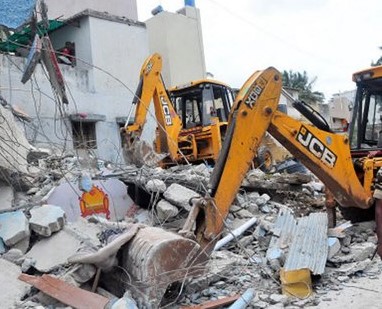
HYDRA has been granted extensive powers to handle encroachments, demolitions, and land disputes, following approval from the Governor of Telangana. These new powers will enable the authority to act swiftly on illegal constructions and land encroachments without delay, marking a significant shift in urban governance.
Under Section 374B of the GHMC Act, 1955, HYDRA can now inspect encroachments, issue notices, and carry out evictions on government land. Additionally, the Telangana Municipal Act, 2019, extends to HYDRA the same responsibilities previously held by municipal and corporation commissioners. The Telangana B-PASS Act, 2020, further grants HYDRA authority through the Zonal Task Force and the District Task Force.
HYDRA’s enhanced authority also draws from several other legislative frameworks. The HMDA Act, 2008, grants the HYDRA Commissioner powers over urban development, while Section 1317F of the Telangana Land Revenue Act authorizes the RDO and District Collector to handle evictions and protect assets. HYDRA also gains authority under the Telangana Irrigation Act, G.O. Ms. 67 (2002), the Telangana Land Encroachment Act, 1905, WALTA Act, 2002, and the Telangana Fire Services Act.
With these new powers, HYDRA is expected to streamline operations, particularly in cases involving illegal constructions. The changes will allow the authority to act without lengthy delays, ensuring efficient enforcement of urban laws.
Public reaction to these new powers has been mixed. While many officials and urban planners welcome the move as a step toward better city management, some activists and residents have expressed concerns about potential misuse of this authority. The effectiveness of HYDRA’s new role will become clear in the coming months as it begins tackling the city’s pressing urban challenges.
These new developments represent a major step in Hyderabad’s journey towards better urban governance, with the goal of creating a more organized and lawful urban environment.