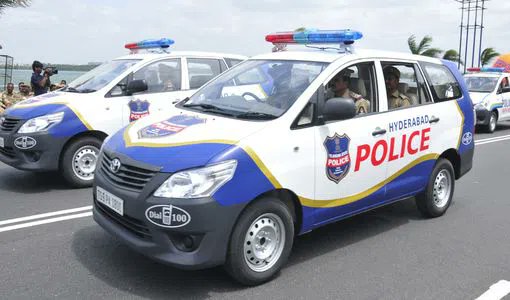
In a startling revelation, an RTI (Right to Information) query has uncovered a shocking irony: police officers, who regularly fine citizens for traffic violations, have themselves accumulated a staggering ₹68.67 lakh in unpaid fines. The RTI query, filed by activist Lokendra Singh, exposes a total of 17,391 pending traffic fines on police vehicles in Telangana.
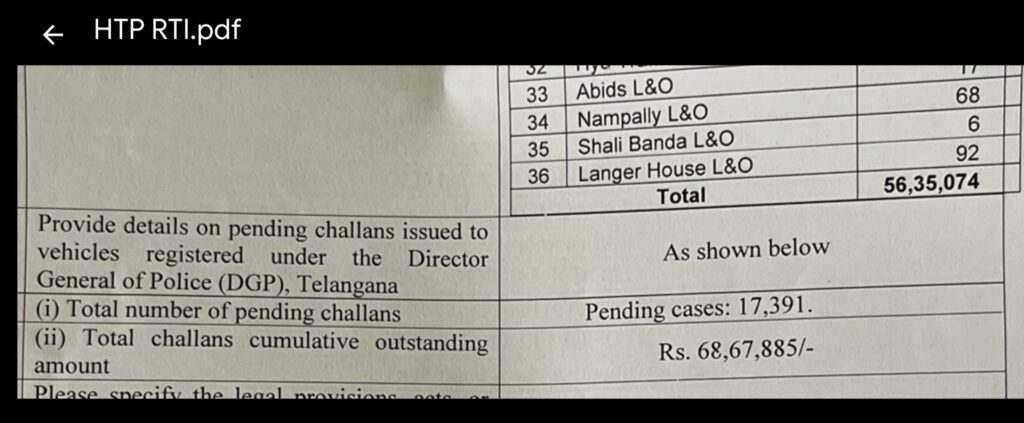
While the Telangana Police force is responsible for enforcing road safety and ensuring adherence to traffic rules, the RTI data reveals that police vehicles themselves have been in violation of traffic regulations. The fines, which span multiple infractions, have yet to be cleared, casting a shadow over the credibility of law enforcement agencies responsible for maintaining law and order on the roads.
The RTI response reveals that the fines, totaling ₹68.67 lakh, are linked to police vehicles registered under the Telangana Director General of Police (DGP). These fines stem from violations captured by automated traffic monitoring systems at various signal-operated junctions across the city. Despite the police’s enforcement efforts to penalize erring citizens, they have not paid their own pending fines, raising serious questions about accountability and discipline within the police department.
The traffic violations identified range from overspeeding to illegal parking, despite police vehicles being under strict scrutiny while in operation. Interestingly, while these fines accumulate, the police department has not made significant efforts to resolve the matter. This situation has sparked public outcry, with citizens pointing out the hypocrisy of the system.
Lokendra Singh, an advocate for road safety and traffic law enforcement, filed the RTI request seeking transparency regarding unpaid fines by police vehicles. The response revealed the extent of the violation, amounting to tens of thousands of unpaid challans. Singh expressed concern over the matter, emphasizing that it was crucial for the police to uphold the same standards they enforce on the public.
“The police force is tasked with ensuring public safety, and they have the responsibility to set an example. If they themselves are violating traffic rules and failing to pay fines, it undermines public trust and sets a bad precedent,” Singh said in a statement.
The RTI revelation has stirred a debate over accountability within the police force. Singh has called for the authorities to take immediate action and address the issue. He has urged the Telangana Police to clear the outstanding fines and impose necessary disciplinary measures on the responsible officers. Furthermore, Singh is pushing for greater transparency in the handling of police vehicle-related traffic violations.
Experts also suggest that this issue highlights a larger problem of accountability within government departments and law enforcement agencies. Many citizens have expressed frustration at the perceived double standards in the enforcement of rules, where authorities themselves are not subject to the same scrutiny and penalties.
This incident underscores the need for stricter monitoring and transparency in the enforcement of traffic laws, particularly for those in positions of power. Public trust in the police is paramount, and when the enforcers of the law become the violators, it raises questions about the integrity of the entire system.
The Telangana Police have yet to respond to requests for comments, but this issue will likely continue to make headlines, urging the authorities to take action and restore faith in the enforcement of road safety regulations. Meanwhile, the public remains hopeful that the RTI findings will lead to necessary reforms and that justice will be served for those responsible for this troubling oversight.
The discovery of unpaid fines on police vehicles is a clear example of the contradictions in a system designed to enforce order. As this issue continues to unfold, it serves as a reminder that no one, not even those in positions of power, should be exempt from the law. The case also emphasizes the importance of accountability within law enforcement and highlights the need for the police to lead by example in ensuring road safety for all.