
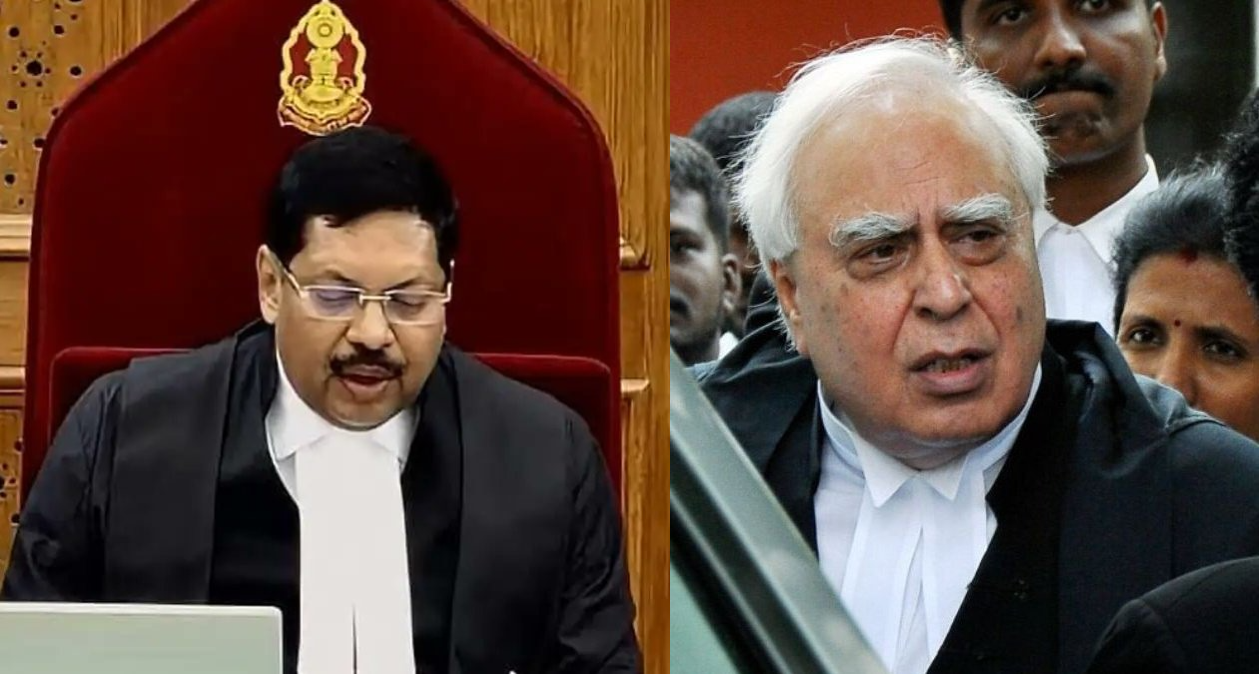
A notable exchange occurred in the Supreme Court today during the hearing on petitions challenging the constitutional validity of the Waqf (Amendment) Act, 2025. Senior Advocate Kapil Sibal, representing one of the petitioners, argued that Islamic shrines do not involve offerings similar to Hindu temples. In a rare personal interjection, Chief Justice of India (CJI) D.Y. Chandrachud — joined by CJI BR Gavai on the bench — responded pointedly.
“I have been to the dargah, and I have seen that offerings are made there too,” CJI Gavai said, refuting Sibal’s claim and stirring strong reactions in the courtroom and online.
The hearing, which has drawn nationwide attention due to its implications for religious and constitutional rights, centered around the legality and scope of the Waqf (Amendment) Act. Petitioners have alleged that the Act grants disproportionate control to Waqf boards over properties and infringes upon religious freedoms of other communities.
Kapil Sibal, while making a case for interim relief, claimed that practices at Islamic sites differ fundamentally from Hindu rituals. However, the bench remained unconvinced, stressing that personal observations and generalizations are not grounds for constitutional interpretation.
The court further emphasized that an interim stay on a law passed by Parliament cannot be granted lightly. “You need a strong and glaring case for us to consider an interim relief,” the bench observed. It reiterated that any law enacted by Parliament is presumed to be constitutional unless convincingly proven otherwise.
The Central Government, defending the Act, argued that waqf is neither a fundamental right nor an essential religious practice protected under Article 25 or 26 of the Constitution. The Centre further maintained that the Waqf Act operates within the secular framework of property management and does not impinge upon religious freedom.
The hearing has now been adjourned, with the court expected to resume detailed arguments on the constitutional questions raised.