
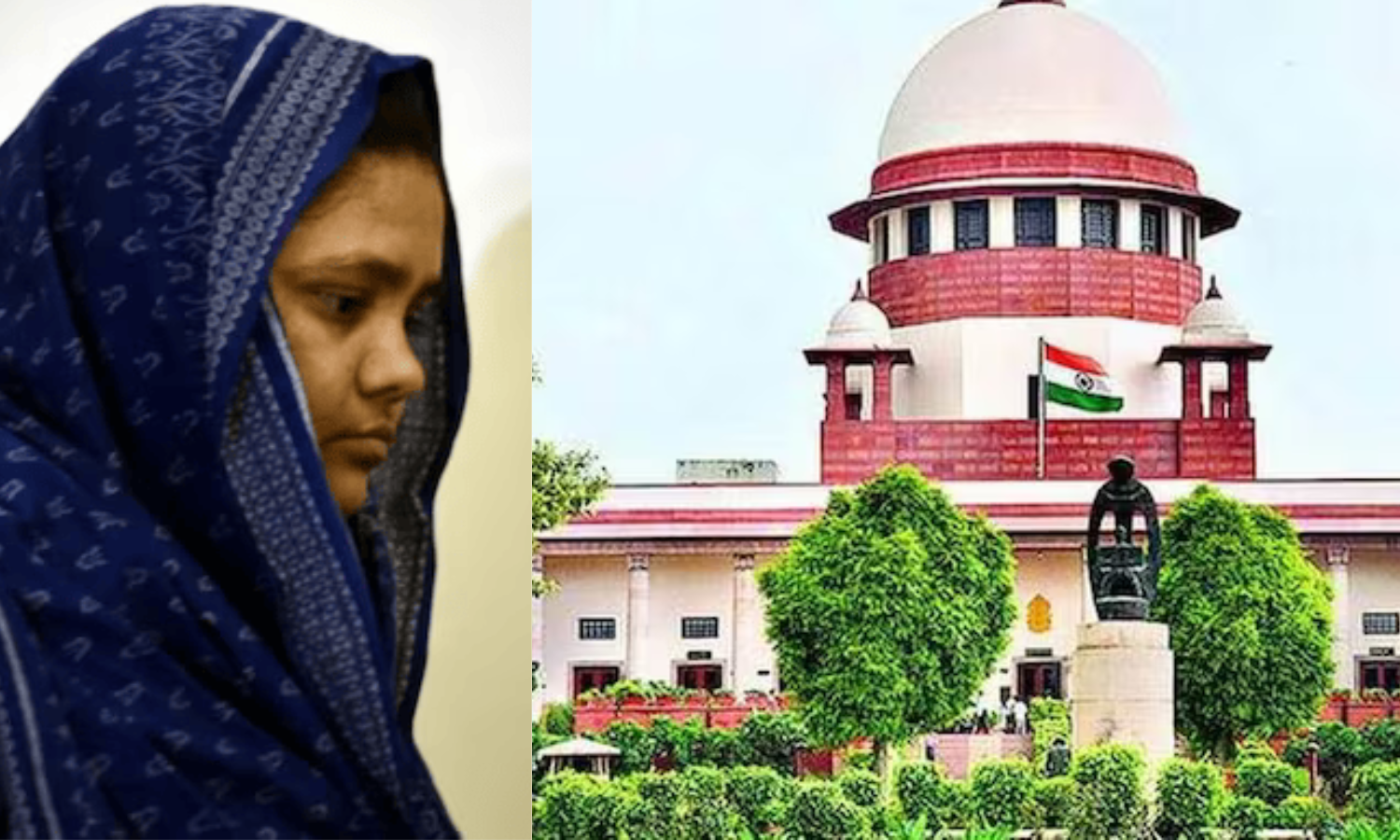
The Supreme Court has invalidated the Gujarat government’s decision to grant remission to 11 convicts involved in the heinous gang-rape of Bilkis Bano and the murder of her family during the 2002 Godhra riots. In a landmark ruling, the court highlighted that the state’s action constitutes both usurpation and abuse of power. This decision emphasizes the importance of upholding justice and preventing any misuse of authority in such sensitive cases, setting a precedent for accountability and safeguarding the rights of victims. The judiciary’s stance sends a strong message against any attempts to undermine the severity of such crimes through executive actions, reinforcing the principles of justice and equity in our legal system.
India’s Supreme Court has ordered the return to prison of eleven men initially found guilty of gang-raping a pregnant Muslim woman and murdering 14 of her family members during the 2002 Godhra riots. The men, part of a Hindu mob, were serving life sentences until their release in August 2022 by the order of Gujarat’s government, sparking global outrage.
Bilkis Bano, the survivor, expressed tears of relief upon hearing that the decision to free her attackers had been overturned. She thanked the Supreme Court for providing vindication and hope in the promise of equal justice for all, having petitioned the court after the men were released.
The two-judge Supreme Court bench, led by Justice BV Nagarathna, ruled that Gujarat lacked the competence to pass the remission order as the men had been tried and convicted in the neighboring state of Maharashtra. The bench emphasized that the rule of law must be preserved, regardless of the consequences’ ripples, affirming the primary duty of the court to uphold justice and the rule of law.
The decision is poised to create significant impact, especially in Gujarat, where Prime Minister Narendra Modi faced criticism for his alleged inaction during the 2002 riots. The Gujarat state government had sought federal approval to release the men, granted by the home ministry led by Modi’s close aide Amit Shah.
Officials argued in court that the 11 men, initially convicted in 2008, had spent over 14 years in jail and were released based on factors like age and good behavior. Upon their release in 2022, they received a heroes’ welcome, greeted with sweets and gestures of respect from relatives.
Federal prosecutors contended against their premature release, citing the heinous nature of their crime. The riots began after a fire on a passenger train in Godhra town killed 60 Hindu pilgrims, leading to widespread violence against Muslims.
After her attackers’ release, Bilkis Bano voiced her loss of faith in justice. She called upon the Gujarat government to undo the harm caused. The attack on her and her family was one of the most brutal crimes during the riots, triggered by the train fire in Godhra.
Bilkis Bano’s fight for justice has been long and harrowing, marked by intimidation attempts, evidence destruction, and threats. Over the years, courts convicted numerous individuals for their roles in the riots, though some high-profile accused received bail or were exonerated. The Supreme Court panel in 2013 ruled insufficient evidence to prosecute Narendra Modi, who became prime minister in 2014, yet critics continued to hold him accountable for the events during his tenure.
The Supreme Court’s landmark decision to compel the return of eleven men involved in the gang rape and murder during the 2002 Godhra riots has brought renewed attention to the complexities of justice, political accountability, and the aftermath of communal violence in India. Released prematurely in August 2022 by the Gujarat government, the men’s celebration upon leaving prison had triggered global outrage and calls for a reevaluation of India’s commitment to justice.
Bilkis Bano, the survivor of the horrific assault, expressed a mixture of relief and gratitude towards the Supreme Court’s decision. Her journey, marked by trauma and perseverance, became a symbol of resilience against the backdrop of communal tensions and alleged state apathy.
The two-judge Supreme Court bench, led by Justice BV Nagarathna, not only nullified the remission order but underscored the vital role of justice in preserving the rule of law. The ruling emphasized the court’s commitment to ensuring justice not only for the convicts but also for the victims, highlighting the nuanced responsibility borne by the judiciary in cases of such magnitude.
The ramifications of this decision extend beyond the courtroom, especially in Gujarat, where the riots unfolded, and Narendra Modi, the current Prime Minister, faced criticism for his handling of the situation during his tenure as Chief Minister. The decision challenges the narrative surrounding accountability and political responsibility, prompting a reevaluation of how the legal system navigates cases of mass violence and communal strife.
Gujarat’s state government, seeking federal approval for the convicts’ release, had its decision questioned by the Supreme Court. The subsequent approval by the home ministry, led by Modi’s close aide Amit Shah, brought attention to the intersection of politics and justice in the aftermath of communal violence.
While state officials argued that the release was based on considerations like age and good behavior, federal prosecutors staunchly opposed leniency, deeming the crime heinous, grave, and serious. The contrast in perspectives adds layers to the discourse surrounding the judicial process, particularly in cases where the nature of the crime intersects with political decisions.
The Supreme Court’s ruling underscores the ongoing challenges in navigating the aftermath of communal violence in India. Bilkis Bano’s fight for justice, including her appeal to the Gujarat government to rectify the harm caused, reflects the long and arduous journey survivors endure in seeking accountability.
This case also serves as a reminder of the systemic issues within the legal process, with attempts at intimidation, evidence destruction, and threats documented during Bilkis Bano’s pursuit of justice. While courts have convicted numerous individuals for their roles in the riots, the complexity and sensitivity of such cases continue to pose challenges for the justice system.
As the convicts are now mandated to return to prison within two weeks, the Supreme Court’s decision holds implications for the broader discourse on justice, accountability, and the delicate balance between legal processes and political influences in the aftermath of communal violence.