
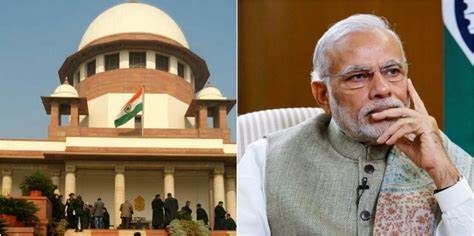
The Supreme Court of India has paused the deportation of six individuals, including a family, who were reportedly being sent to Pakistan via the Attari-Wagah border. The apex court intervened after the group claimed they were Indian citizens and presented documents such as Aadhaar cards and voter IDs to support their case.
The family, allegedly being forcibly taken for deportation, refused to cross the border and insisted they had long been residents of India. Following this, the court directed the Union government not to take any coercive action against them until their claims of Indian citizenship are thoroughly verified.
The case has drawn national attention, as it raises important legal questions about what constitutes valid proof of citizenship. While Aadhaar and voter ID cards are commonly used for identification and access to services, they are not considered definitive proof of nationality under the Citizenship Act of 1955.
Legal experts note that citizenship in India must be established through documents recognized under the law, such as birth certificates, naturalization certificates, or parental lineage documentation. Previous court rulings, including one by the Patna High Court, have clarified that Aadhaar and similar IDs do not automatically confer citizenship.
The Election Commission has also stated that linking Aadhaar with voter ID is not mandatory, further complicating efforts to use such documents as proof of nationality.
The Supreme Court’s order is being seen as a necessary step to ensure that due process is followed, especially in cases involving potential statelessness or wrongful deportation. The case will now proceed with a detailed investigation into the individuals’ legal status, and the court will decide further action based on findings