
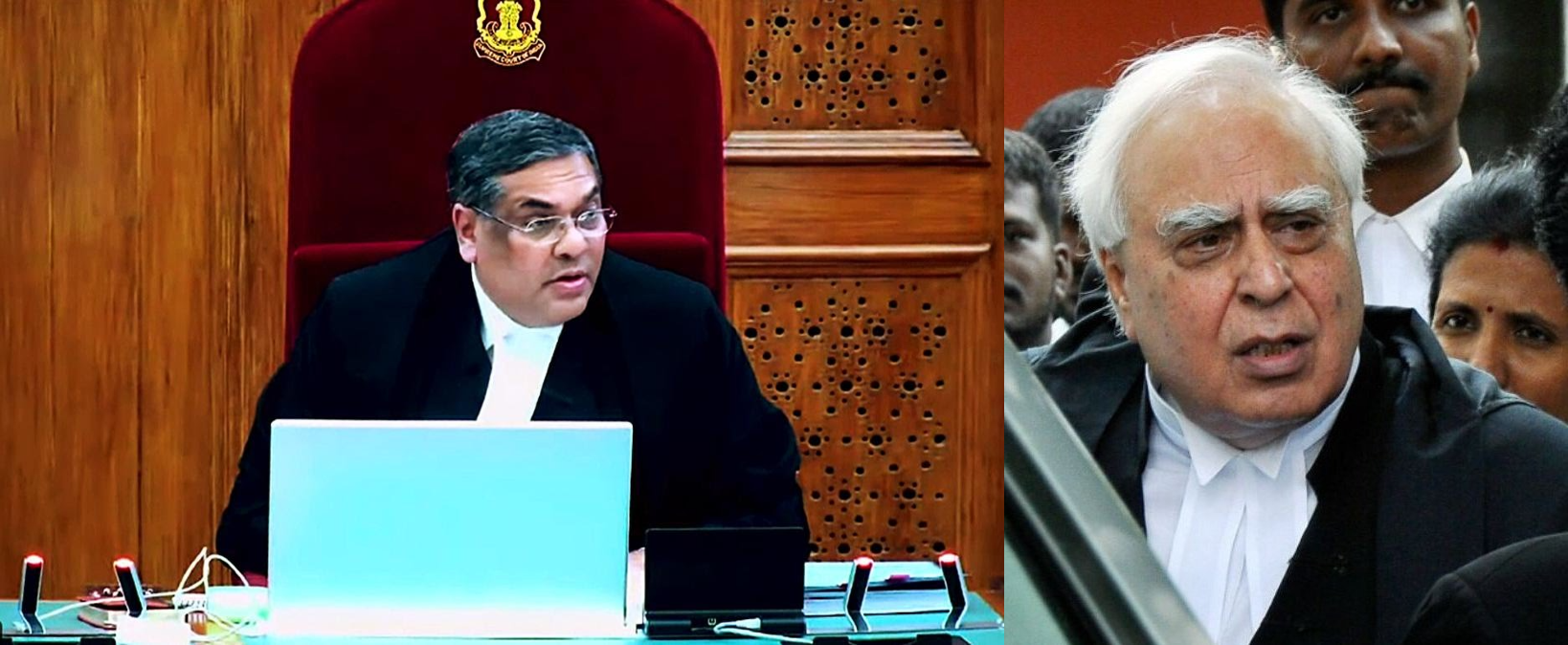
In a significant development in the ongoing legal battle over the Waqf (Amendment) Act, 2025, Chief Justice of India (CJI) Sanjiv Khanna has opted to bow out of the case, handing over the responsibility to his successor, Justice B.R. Gavai. The decision comes ahead of CJI Khanna’s impending retirement on May 13, 2025.
As the case involving petitions challenging the constitutionality of the Waqf (Amendment) Act nears a crucial phase, CJI Khanna decided to avoid passing any interim orders, leaving the matter to the incoming CJI, B.R. Gavai, who is set to take office on May 14, 2025.
The case, which revolves around significant amendments to the Waqf Act and the potential impact on the management and administration of waqf properties across the country, will now be heard under the leadership of CJI Gavai, with the next hearing scheduled for May 15, 2025.
The Waqf (Amendment) Act, 2025, has been under scrutiny due to concerns raised by several petitioners regarding its provisions, including the registration of waqf properties and disputes related to waqf by user. The Act allows for the creation of a central waqf register and centralizes the management of waqf properties, which has sparked challenges from various parties.
During the May 5 hearing, CJI Khanna, along with Justices Sanjay Kumar and K.V. Viswanathan, discussed the case and noted the importance of carefully examining the provisions of the Act. Given the complexity of the issue, the bench deemed it impractical to pass an interim order without thorough deliberation. As a result, they decided to defer the matter to the next CJI, BR Gavai, for further action.
The Modi government, which strongly supports the Waqf (Amendment) Act, has assured the court that it will not proceed with the denotification of waqf properties or make appointments to the Central Waqf Council or state waqf boards until the next hearing. This assurance has effectively maintained the status quo, allowing the legal process to unfold without further disruption.
The Supreme Court’s decision to delay any interim order is seen as a crucial moment for the government, which is expected to defend the Waqf Act vigorously. The legal battle over the Act is expected to continue with heightened attention on its implications for the management of waqf properties and their regulation.
The government and the petitioners are set to present their arguments in full during the upcoming hearing, and the case will continue to shape the future of waqf governance in India.